


Fleas
Fleas: Facts, Habits, and Risks
Fleas are a serious pest, especially for homes with cats or dogs. They can transmit diseases, and infestations are often found in homes that previously housed pets.
Physical Characteristics
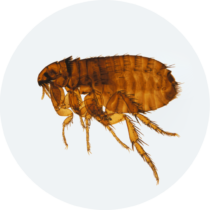
Size: Most fleas are 2–3 mm long.
Color: Typically red or brown.
Life Stages:
Adults feed on the blood of mammals or birds.
Larvae feed on organic matter in carpets or bedding.
Cocoons can remain dormant for two years or more and are activated by vibrations, such as footsteps
Flea Behavior and Infestations
Fleas can remain dormant in an empty home and reactivate when people or pets move in.
High levels of hygiene and cleaning of carpets, bedding, and pet areas can slow their life cycle.
Types of Fleas and Human Interaction
Human Fleas:
Rare in cities; more common around farms, especially on pigs.
Will bite anywhere on the body and cause itchiness.
Cat Fleas:
Can bite humans but do not live on the human body.
Most bites occur on feet and lower legs.
Larger populations often live in carpets and pet bedding than on the pets themselves.
Physical Characteristics
Actual Size: ~3.1 mm
Color: Reddish-brown
Body: Wingless and laterally compressed
Legs: 6
Antennae: Present
Wings: None
Habits and Behavior
Fleas are parasites that feed exclusively on the blood of warm-blooded hosts.
They thrive in moist, humid, and shaded areas.
Inside homes, larvae live in carpets, bedding, pet beds, and upholstered furniture, avoiding light.
Flea Habitat
Fleas are highly adaptable and can live in a variety of outdoor and indoor environments:
Outdoor Habitat:
Under porches or decks (overwintering sites)
Areas with tall grass, leaf litter, weeds, wood piles, gravel, or sandy patches
Shaded areas under shrubs, leaves, and trees
Fleas avoid sunny, open grass
Indoor Habitat:
Enter homes attached to pets
Larvae prefer dark areas like carpets, bedding, pet beds, and upholstered furniture
These areas provide safe homes for flea eggs, larvae, and pupae