


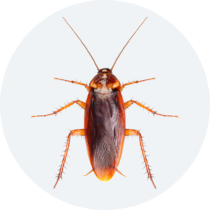
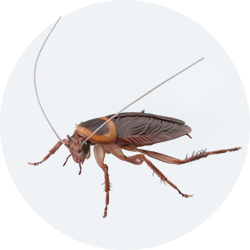
 Actual Size: 53.3 mm
Characteristics: Brown to reddish-brown; winged.
Legs: 6
Antennae: Yes
Habits:
- Both sexes are capable of flight.
- Largest of the house-infesting cockroaches.
- Attracted to alcoholic beverages, especially beer.
Habitat:
It is a common inhabitant of sewers, storm drainage systems, factories, hospitals, and hotels. The American cockroach is omnivorous and an opportunistic feeder. It consumes decaying organic matter but is a scavenger and will eat almost anything. It prefers sweets but has also been observed eating paper, pet food, soap, hair, fruit, book bindings, cardboard boxes, cloth, and dead insects.
American cockroaches prefer warm, damp environments and can often be found outdoors around drains, garbage bins, trees, and woodpiles. When these roaches venture inside homes in search of food, they often live in damp areas such as basements, garages, kitchens, and bathrooms.
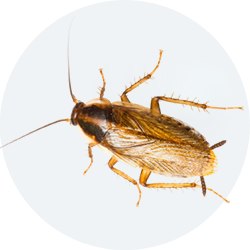 Actual Size: 12.7 mm to 15.8 mm
Characteristics: Pale brown with two dark longitudinal stripes behind the head.
Legs: 6
Antennae: Yes
Wings: Yes, but rarely fly.
Habits:
- Both sexes fully winged, but do not fly.
- Can live in big colonies as they reproduce quickly.
- Lives indoors, completely dependent on human habitats for survival.
Habitat:
German cockroaches are found primarily in kitchens, bathrooms, or other areas where daily access to water is available. If sanitation is poor, the German cockroach can successfully expand its normal habitat to include all portions of a structure where adequate food, water, and shelter exist.
German cockroaches prefer to hide in wooden and paper materials, as well as electrical equipment. These roaches can also be found hiding in cabinets, drawers, up under sinks, and inside heat-producing appliances like dishwashers, microwaves, and coffee makers.
Prefer humid, warm areas. Often found in residential and commercial kitchens as well as bathrooms. Usually in areas where people eat and drink.
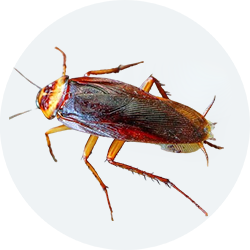 Actual Size: Little over 12.7 mm long
Characteristics: mostly light brown
Legs: 6
Antennae: Yes
Wings: Yes, adults have wings and can fly.
Habits:
- Small cockroaches living in fields, gardens and woods.
- We can meet them outside from Spring to Fall. Summer is the most common period to find them.
- It can enter sometimes into buildings attracted by lights.
- It can get inside through wood or plants.
Habitat
Like other roaches, they feed on decomposing material and garbage, among other things. This leads them to compost piles and landscaping cluttered with leaves or damp mulch.
If they come indoors, they’ll fly toward lights and TV screens. They’ll usually hide close to food sources or in areas with the highest humidity.